Buy twot.eu ?
We are moving the project
twot.eu .
Are you interested in purchasing the domain
twot.eu ?
domain@kv-gmbh.de · 0541-91531010
Buy twot.eu ?
How do I expand parentheses and handle the negative sign inside the parentheses?
To expand parentheses and handle the negative sign inside, you can distribute the negative sign to each term inside the parentheses. This means that you will change the sign of each term inside the parentheses. For example, if you have -(3x + 4), you would distribute the negative sign to get -3x - 4. This is done by changing the positive terms inside the parentheses to negative and the negative terms to positive. **
How do you open parentheses?
To open parentheses, you simply press the key that has the "(" symbol on it. On most keyboards, this key is located to the right of the "P" key. If you are using a mobile device, you can usually find the parentheses symbol by switching to the symbols or numbers keyboard. **
Similar search terms for Parentheses
Top-Angebote
Products related to Parentheses:
-
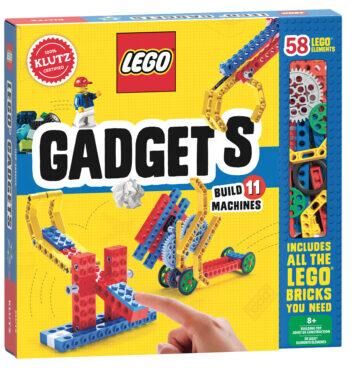
Klutz: LEGO GadgetsThis activity kit will have you building 11 machines including a gravity powered car and a wacky boxing robot. The fun doesn't stop once you've completed all of the projects in the book - open-ended prompts will inspire you to continue experimenting...24,99 $*Shipping: 0,00 $Secure redirect to the provider
-
How do you change parentheses?
To change parentheses, you can simply replace them with different types of parentheses or remove them altogether. For example, you can change round parentheses ( ) to square brackets [ ] or curly braces { }. You can also change the placement of parentheses to alter the grouping of elements in a mathematical expression or sentence. Additionally, you can add or remove parentheses to clarify the meaning of a statement or to improve readability. **
-
How do you use parentheses?
Parentheses are used to provide additional information or clarification within a sentence. They can contain extra details, examples, or explanations that are not essential to the main point of the sentence. It is important to remember that the sentence should still make sense if the information inside the parentheses is removed. Additionally, parentheses can also be used to enclose citations, dates, or mathematical equations within a sentence. **
-
How do you calculate parentheses?
To calculate parentheses, you follow the order of operations, which is PEMDAS: Parentheses, Exponents, Multiplication and Division (from left to right), and Addition and Subtraction (from left to right). Start by solving the operations inside the parentheses first, then work your way outwards following the order of operations. If there are nested parentheses, solve the innermost set first and then move outward. This ensures that you calculate the expressions within the parentheses before combining them with the rest of the equation. **
-
How do you correctly read parentheses?
To correctly read parentheses, you should start by evaluating the expression inside the innermost set of parentheses first. Then, work your way outwards, following the order of operations (parentheses, exponents, multiplication and division, addition and subtraction). It is important to remember that parentheses are used to group parts of an expression together, indicating that those parts should be evaluated as a single unit. By following these steps, you can ensure that you read parentheses correctly and accurately evaluate mathematical expressions. **
How do you write without parentheses?
To write without parentheses, you can use alternative punctuation or sentence structures to convey the same information. For example, you can use commas, dashes, or brackets to set off additional information within a sentence. You can also rephrase the sentence to separate the additional information into its own sentence or use a footnote to provide extra context. Overall, the key is to be clear and concise in conveying the intended meaning without relying on parentheses. **
How do you read parentheses correctly?
To read parentheses correctly, you should start by looking for the opening parenthesis "(" and then find the corresponding closing parenthesis ")". The content within the parentheses is typically read as a separate unit from the rest of the sentence. It is important to remember that the information within the parentheses is usually additional or clarifying, but not essential to the main sentence. Reading the sentence without the content within the parentheses should still make sense. **
Top-Angebote
Products related to Parentheses:
-
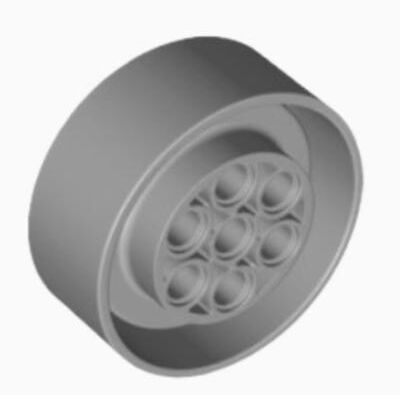
Lush Living Finds Perforated Brick Assembly Toy Accessories With Technology Mechanical Wheels Perforated Brick Assembly Toy Accessories With Technology Mechanical WheelsEnhance Creativity with Technology Mechanical Wheels Unlock the power of innovation with our technology mechanical wheels, designed specifically for perforated brick assembly toy accessories. Whether you are a hobbyist or a seasoned builder, these...43,97 $*Shipping: 0,00 $Secure redirect to the provider
-
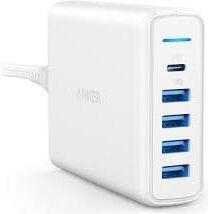
Anker PowerPort 60 W 6-Port Family-Sized Desktop USB Charger with PowerIQ Technology for Smartphones - White, NewThe Anker Advantage: Join the 10 million+ powered by Amazon's leading charging brand. Fast Charging Technology: PowerIQ and VoltageBoost combine to provide the fastest possible charge up to 2.4 amps per port or 12 amps overall (Qualcomm Quick Charge 2.0 not supported. For QC 2.0 charging, please see Anker's 18W USB Wall Charger). Ultra Powerful: 6 ports pump out 60 watts of power, enabling simultaneous multi-device charging. Certified Safe: Anker's MultiProtect safety system and UL certification ensure complete protection for you and your devices. Worldwide 100-240 volt AC input voltage What You Get: Anker PowerPort 6 (60W 6-Port USB Charging Hub), 5ft / 150cm detachable power cord, welcome guide, our fan-favorite 18-month warranty and friendly customer service.. Brand Anker Connectivity technology USB Connector type USB Type C Compatible devices Smartphones, Tablets, Laptop Compatible phone models All Smartphones Included components USB Cable Cable length 5 Feet Special feature Lightweight Design, Travel, Fast Charging Colour White Input voltage 100 Volts49,99 £*Shipping: 0,00 £Secure redirect to the provider
-
Klutz: LEGO GadgetsThis activity kit will have you building 11 machines including a gravity powered car and a wacky boxing robot. The fun doesn't stop once you've completed all of the projects in the book - open-ended prompts will inspire you to continue experimenting...24,99 $*Shipping: 0,00 $Secure redirect to the provider
-
How do I expand parentheses and handle the negative sign inside the parentheses?
To expand parentheses and handle the negative sign inside, you can distribute the negative sign to each term inside the parentheses. This means that you will change the sign of each term inside the parentheses. For example, if you have -(3x + 4), you would distribute the negative sign to get -3x - 4. This is done by changing the positive terms inside the parentheses to negative and the negative terms to positive. **
-
How do you open parentheses?
To open parentheses, you simply press the key that has the "(" symbol on it. On most keyboards, this key is located to the right of the "P" key. If you are using a mobile device, you can usually find the parentheses symbol by switching to the symbols or numbers keyboard. **
-
How do you change parentheses?
To change parentheses, you can simply replace them with different types of parentheses or remove them altogether. For example, you can change round parentheses ( ) to square brackets [ ] or curly braces { }. You can also change the placement of parentheses to alter the grouping of elements in a mathematical expression or sentence. Additionally, you can add or remove parentheses to clarify the meaning of a statement or to improve readability. **
-
How do you use parentheses?
Parentheses are used to provide additional information or clarification within a sentence. They can contain extra details, examples, or explanations that are not essential to the main point of the sentence. It is important to remember that the sentence should still make sense if the information inside the parentheses is removed. Additionally, parentheses can also be used to enclose citations, dates, or mathematical equations within a sentence. **
Similar search terms for Parentheses
-
How do you calculate parentheses?
To calculate parentheses, you follow the order of operations, which is PEMDAS: Parentheses, Exponents, Multiplication and Division (from left to right), and Addition and Subtraction (from left to right). Start by solving the operations inside the parentheses first, then work your way outwards following the order of operations. If there are nested parentheses, solve the innermost set first and then move outward. This ensures that you calculate the expressions within the parentheses before combining them with the rest of the equation. **
-
How do you correctly read parentheses?
To correctly read parentheses, you should start by evaluating the expression inside the innermost set of parentheses first. Then, work your way outwards, following the order of operations (parentheses, exponents, multiplication and division, addition and subtraction). It is important to remember that parentheses are used to group parts of an expression together, indicating that those parts should be evaluated as a single unit. By following these steps, you can ensure that you read parentheses correctly and accurately evaluate mathematical expressions. **
-
How do you write without parentheses?
To write without parentheses, you can use alternative punctuation or sentence structures to convey the same information. For example, you can use commas, dashes, or brackets to set off additional information within a sentence. You can also rephrase the sentence to separate the additional information into its own sentence or use a footnote to provide extra context. Overall, the key is to be clear and concise in conveying the intended meaning without relying on parentheses. **
-
How do you read parentheses correctly?
To read parentheses correctly, you should start by looking for the opening parenthesis "(" and then find the corresponding closing parenthesis ")". The content within the parentheses is typically read as a separate unit from the rest of the sentence. It is important to remember that the information within the parentheses is usually additional or clarifying, but not essential to the main sentence. Reading the sentence without the content within the parentheses should still make sense. **
* All prices are inclusive of VAT and, if applicable, plus shipping costs. The offer information is based on the details provided by the respective shop and is updated through automated processes. Real-time updates do not occur, so deviations can occur in individual cases. ** Note: Parts of this content were created by AI.